
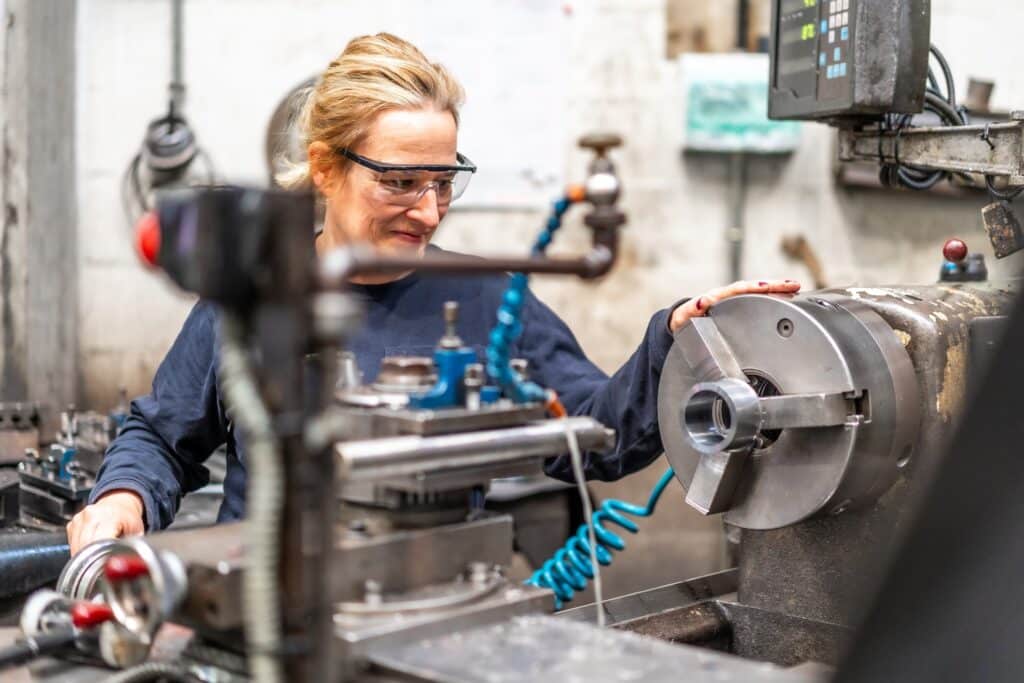
During the second SKillAIbility General Assembly at the Norwegian University of Science and Technology (NTNU) in Trondheim, Greta Braun from Chalmers University of Technology presented new findings on global megatrends and the future of work. The session explored how global changes in technology, society, and the environment are reshaping skills and employment in Europe.
Understanding global megatrends and tipping points
Global megatrends are powerful, long-term forces that drive economic, social, and technological transformation. They can lead to structural shifts and tipping points — irreversible changes that redefine industries and labour markets. Understanding these dynamics is key to developing human-centric and future-ready skills in line with Europe’s digital and green transitions.
Six megatrends shaping the future of work
The SKillAIbility project identifies six global megatrends that are reshaping the way people work and learn:
- Demographics: Ageing populations in developed regions and youth surges elsewhere affect workforce availability and healthcare demand.
- Green transition: Circular economy models and environmental regulations drive the rise of green skills.
- Skill gaps: Rapid advances in AI, robotics, and sustainability increase the need for reskilling and upskilling.
- Work-life balance & wellbeing: Flexible work, mental health, and employee wellbeing are key to retention and productivity.
- Diversity, Equity & Inclusion (DEI): DEI is both an ethical commitment and a business advantage, reinforced by leadership accountability and EU Diversity Charters.
- Global market dynamics: The balance between global integration and regional resilience is shifting toward robustness over efficiency.
Predicting technological impacts on work
Predicting how technology will impact future jobs is challenging due to the fast and non-linear pace of change. Task 2.2 of SKillAIbility project applies advanced foresight tools to analyse trends and identify emerging skill needs:
- Trend radars reveal new technologies and evolving work domains.
- Patent analysis tracks innovation and commercialization pathways.
- AI-powered skill gap assessments scale workforce analysis and training needs.
- Global tipping point analysis detects irreversible system transformations.
These methods provide a scientific basis for understanding how technology, innovation, and policy interact to shape the future of work in Europe.
From data to action: building future-ready skills
By translating data into actionable insights, SKillAIbility supports educators, companies, and policymakers in designing strategies that anticipate future workforce needs. The project promotes a resilient, inclusive, and adaptive European labour market — ready to meet the demands of Industry 5.0 and human-centric innovation.

 English
  Italian
  Spanish
  Danish
  Latvian
  Norwegian
  Greek
Greek