
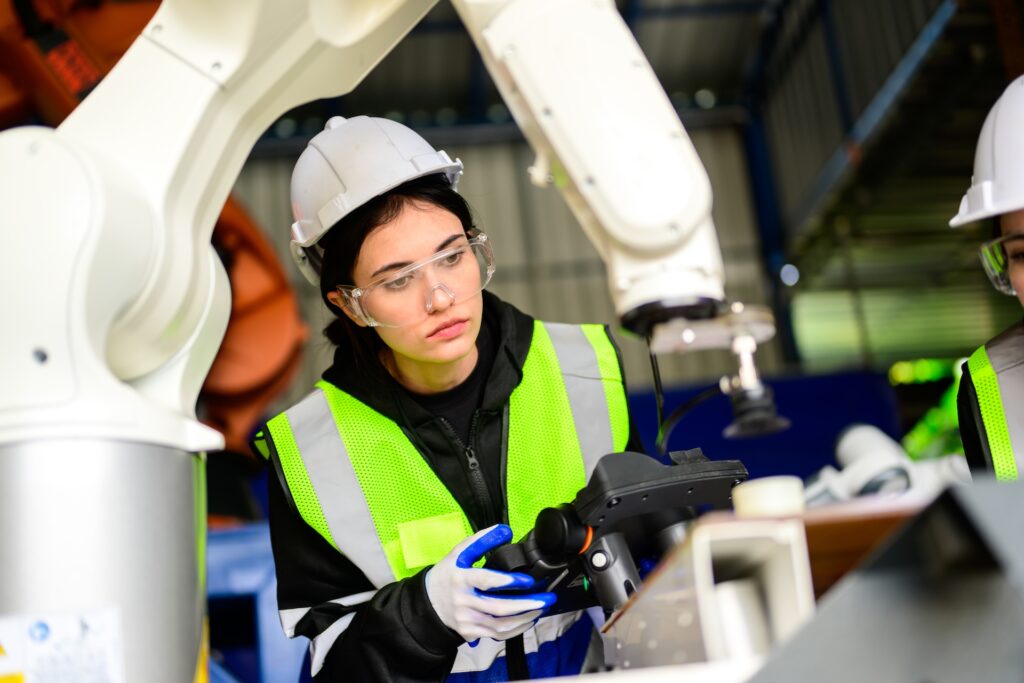
SkillAIbility’s first policy and standardisation gap analysis finds that AI is reshaping manufacturing tasks faster than skills policies, training systems and standards are adapting. It also sets out a toolbox and a roadmap to close the gap.
Tasks change, not just jobs
The debate about AI in manufacturing often centres on jobs lost or saved. SkillAIbility’s analysis points to a different reality: technological transformation “primarily reshapes tasks rather than eliminating jobs”. For policymakers, that changes the question. The priority is not only deploying technology, but helping workers and organisations adapt to new tasks, with the right skills, support and conditions.
The analysis, led by CECIMO, the European association of manufacturing technologies, draws on an ongoing stakeholder consultation, national and regional policy analyses, and project evidence on work organisation and skills.
Six structural gaps
- Skills shortages that increasingly concern transversal, adaptive and task-oriented competences, not only specialised technical expertise.
- Misalignment between training and industry: VET, higher education and lifelong learning lag behind changes in work organisation.
- Fragmented governance across education, employment and industrial policy.
- Limited SME access to training, because of high costs, unclear return on investment, administrative complexity and few tailored offers.
- Territorial disparities in training capacity across regions.
- Weak integration of human-centred and inclusive considerations in policy and standards.
Inclusion as a structural condition
The analysis is clear that accessibility and the participation of persons with disabilities remain “insufficiently operationalised” in industrial, skills and AI governance frameworks. Without accessible training design and coherent policy, digital transformation risks reinforcing existing labour market barriers. Inclusion is therefore treated “not as a complementary objective, but as a structural dimension of resilient industrial and skills policy”.
A policy toolbox
For each gap, the analysis links preliminary policy directions to pre-standardisation considerations. Examples include:
- Embedding accessibility and inclusion criteria, and inclusion KPIs, in public funding instruments
- Promoting task-based, hands-on training that follows Universal Design for Learning principles
- Combining financial incentives with simplified access and modular training pathways for SMEs
- Supporting the certification and recognition of AI and automation skills profiles
- Requiring inclusive user testing in AI-enabled manufacturing systems
A path towards standards
Existing standards on digital competences, AI terminology and human-centred design are important reference points. However, they do not yet address task-level human–AI collaboration, inclusive training validation or AI-augmented role definitions in manufacturing. SkillAIbility proposes three steps:
- Mapping and gap identification of relevant standards, such as the e-Competence Framework, ISO/IEC 22989, ISO/IEC TS 4213 and ISO/TR 16982.
- Concept consolidation and dialogue with standardisation bodies, such as CEN/TC 428 and ISO/IEC JTC 1/SC 42.
- Pre-standardisation outputs, such as technical specifications, guidance documents or a CEN Workshop Agreement.
What comes next
This is a first analysis that reflects emerging trends rather than final conclusions. It will be refined through further stakeholder engagement and validation in the project’s pilots, and will feed SkillAIbility’s policy dialogue with European policymakers in the months ahead.
Read the full analysis: D7.1 Policy toolbox and pre-standardisation roadmap

 Greek
 English
 Italian
 Spanish
 Danish
 Latvian
 Norwegian